
Outdoor Surfaces Built for Years
Deck Repair & Restoration in Augusta for worn boards, structural damage, and weathered outdoor living spaces
Weathered decks show damage through boards that splinter underfoot, fasteners that have popped above the surface creating trip hazards, or railings that flex excessively when pressure is applied. Restoration work begins with repairing structural problems and replacing compromised lumber before any cleaning or refinishing happens, since applying coatings over unstable boards or deteriorated framing only conceals problems temporarily while deterioration continues underneath. Picture Perfect Pro Painting evaluates both visible wear and underlying structural integrity during deck restoration projects in Wiscasset, addressing safety concerns alongside appearance improvements.
The repair process includes removing boards that have rotted where they contact joists, reinforcing or replacing structural framing that has sagged or shows decay, and resetting fasteners that no longer hold securely. Surface preparation involves pressure washing to remove embedded dirt, mildew, and failed coating residue, then sanding to smooth raised grain and splinters. Proper preparation removes the contaminated surface layer that prevents new coatings from penetrating and bonding correctly.
Schedule a deck evaluation to identify structural concerns and determine the extent of repairs needed before refinishing.
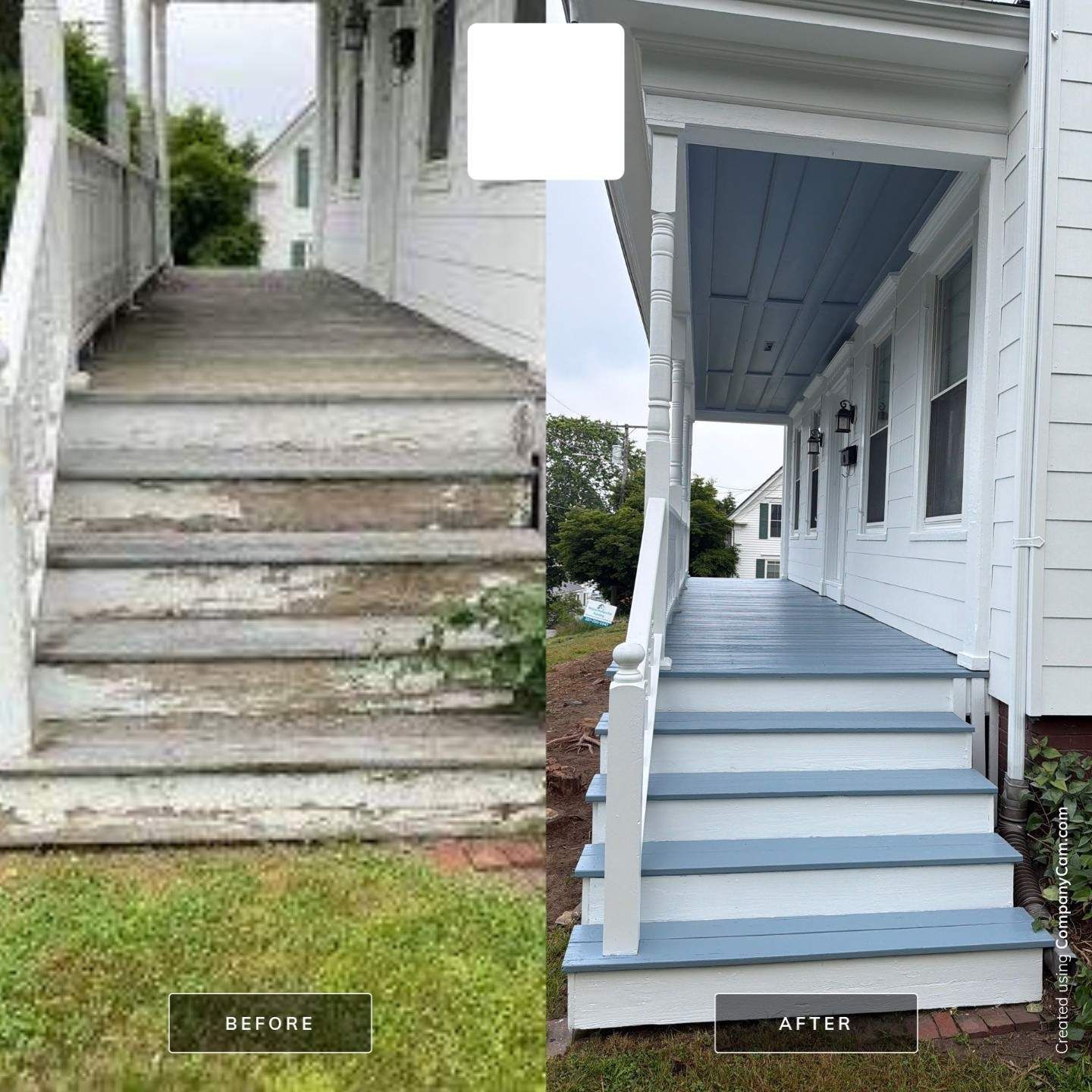
What Changes After Deck Restoration
Deck restoration addresses structural soundness first by replacing boards and reinforcing framing, then prepares surfaces through thorough cleaning that removes years of accumulated grime, algae growth, and coating breakdown. The washing process uses controlled pressure that cleans effectively without damaging wood fibers or driving water deep into end grains where it causes swelling and accelerated decay. After cleaning and drying, surface preparation includes sanding high-traffic areas where foot traffic has worn the wood smooth and compressed the grain structure.
Once restoration finishes, you'll notice that deck boards feel solid underfoot without flex or bounce, railings provide firm support without movement, and surfaces appear uniformly clean without the streaked, grayed appearance that develops from UV exposure and moisture cycling. Applied protective coatings penetrate into prepared wood rather than sitting on top of contaminated surfaces, creating a barrier against water absorption that causes the seasonal swelling and shrinking cycles responsible for most deck deterioration. The restored deck functions as stable outdoor living space rather than a surface requiring cautious navigation around loose boards and protruding fastener heads.
Restoration work includes evaluating what caused the original damage, whether from inadequate drainage that keeps boards wet, missing or deteriorated flashing where the deck attaches to the house, or coating systems that failed prematurely and left wood exposed to weather. The scope addresses these underlying issues rather than just treating visible symptoms, which prevents the same problems from recurring within a few seasons. Durable materials and properly applied finishes extend deck life substantially compared to worn surfaces where water penetrates freely and decay progresses unchecked.
Questions About Deck Services
Deck repair questions typically focus on distinguishing between cosmetic wear that responds to cleaning and refinishing versus structural damage requiring board replacement.
What indicates structural problems versus surface wear?
Boards that flex excessively between joists, soft spots where a screwdriver penetrates easily, or visible rot at joist connections require replacement, while surface graying, minor checking, and dirt accumulation typically respond to cleaning and refinishing without board replacement.
How does Maine's climate affect deck deterioration?
Freeze-thaw cycles cause particular stress on horizontal surfaces where water sits in checks and grain depressions, then expands during freezing to split wood fibers wider, creating progressively larger openings where moisture penetrates deeper with each cycle throughout winter and spring.
What preparation happens before applying protective coatings?
Decks require thorough washing to remove dirt, mildew, and failed coating residue, followed by drying time so moisture content drops below 15 percent, then sanding to smooth raised grain and create clean wood that accepts coatings uniformly rather than showing blotchy absorption patterns.
When should deck restoration happen during the year?
Spring through fall provides the temperature and humidity conditions necessary for proper coating cure, with late spring offering the advantage of addressing winter damage before heavy summer use and allowing adequate time for multiple coating applications to cure fully before autumn weather arrives.
What protective coatings work best for Augusta decks?
The appropriate coating depends on wood species, exposure level, and desired appearance, with penetrating stains offering better performance than film-forming coatings on horizontal surfaces that experience foot traffic and standing water, though specific product selection requires evaluating the deck's condition and maintenance expectations.
Picture Perfect Pro Painting combines structural repairs with surface restoration, addressing both safety and appearance during deck projects. Contact us to arrange an inspection that evaluates your deck's condition and outlines the specific repairs needed before refinishing work begins.